
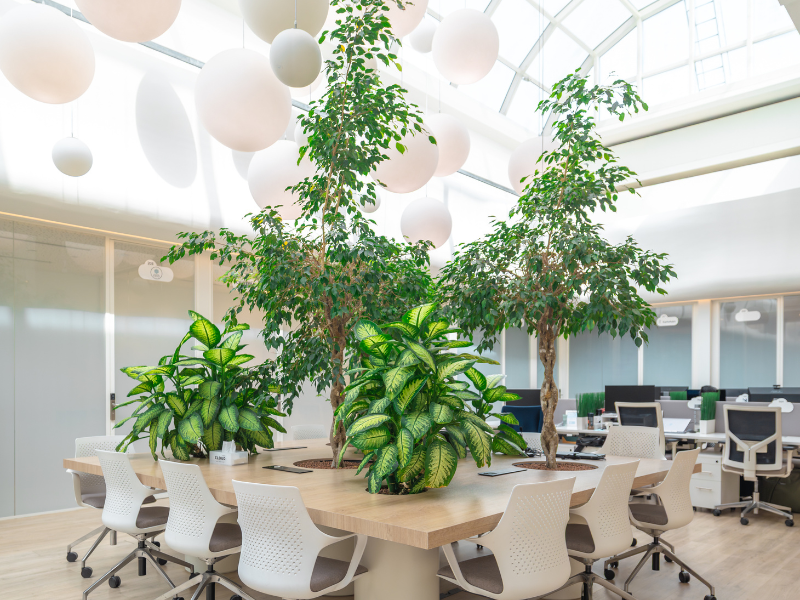
At Cloud Spaces, World Earth Day is not just a date on the calendar, it’s a reflection of how everyday work environments can be designed to be more responsible, more efficient, and more aligned with the way modern businesses operate.
Sustainability in the workplace is often framed as a large-scale commitment: carbon offset targets, ESG reporting, net-zero commitments. Those conversations have their place but some of the most consequential impact happens much closer to the ground, in the design of a workspace, in how resources are shared, and in the small operational decisions that repeat themselves hundreds of times a day. This is where the relationship between working well and working responsibly becomes most tangible.
Space Efficiency as a Sustainability Practice
Underutilised space is one of the quieter contributors to workplace inefficiency; environmental and operational alike. When a workspace is set up around shared resources, the per-person carbon footprint shrinks without anyone needing to make a conscious trade-off.
At Cloud Spaces, this is reflected in the shared resources available across the space, including:
- Meeting rooms and collaborative spaces shared across businesses
- Centralised printing and office equipment
- Shared breakout areas, lounges, and communal spaces
- Pantry areas and water stations used across the space
This kind of setup supports a more considered way of working. Instead of every business managing the same resources separately, Cloud Spaces brings them together in one purpose-built environment; making day-to-day operations simpler while supporting the broader sustainability mindset that World Earth Day brings into focus.
Energy Efficiency Built Into the Environment
Energy-efficient workspaces are most effective when the design itself does the work rather than relying on individual habits or reminders.
Motion-activated lighting across Cloud Spaces ensures that energy is used only when spaces are occupied, reducing unnecessary consumption throughout the day. This alignment between usage and need is built directly into the infrastructure, creating a more energy efficient environment without relying on manual intervention. The most durable sustainable practices don't rely on memory. They rely on good design.
This principle extends to how the space is planned overall, thoughtful layout, well-placed with natural light, and intentional design choices that reduce unnecessary energy draw throughout the day.
The Environment You Work In Shapes How Well You Work
The physical environment has a measurable effect on how people think, focus, and sustain energy through a working day. Research published in the Global Journal of Politics and Humanities (2024) found meaningful links between workspace quality including biophilic elements, lighting conditions, ambient environment and both individual wellbeing and workplace productivity, reinforcing that these are operational considerations as much as aesthetic ones.
Natural light is among the most impactful of these variables supporting alertness and reducing reliance on artificial lighting at the same time. Greenery integrated throughout a workspace contributes to air quality and introduces a sense of calm that translates into more focused, sustained work. Access to filtered, infused water and reusable cups replaces single-use plastic while encouraging the kind of regular hydration that supports concentration across a long working day.
At Cloud Spaces, elements including natural light, plants, water stations, reusable cups are part of how the spaces are built and maintained. Not as features to list, but as the considered details that make a working environment feel genuinely well-thought-through.
Together, these elements contribute to increasing productivity in the workplace; creating an environment where people can perform at their best while operating within a more sustainable framework.
Everyday Choices, Collective Impact
The flexible workspace model brings sustainability into everyday operations by optimising how space, energy, and resources are used without adding complexity for businesses. By working within a shared environment, companies benefit from a setup that is inherently more efficient, where resources are utilised with purpose rather than excess.
For businesses in Riyadh thinking about their environmental commitments alongside their operational ones, the workspace decision is worth examining with both lenses in mind. Cloud Spaces' locations at Kingdom Centre and Roshn Front are designed to offer that, a working environment where the day-to-day experience and the broader impact of how the space runs are genuinely aligned.
The choices that matter most on World Earth Day aren't always the sweeping ones. They're the ones that repeat: the shared resource, the well-designed office space that manages energy without being asked.
The cup you reach for in the morning. The lights that adjust to your presence. The meeting room shared across a community of professionals. The plants at the edge of your desk. The water station instead of the plastic bottle.
None of these are individually dramatic. Together, they compose a working environment that is both more considered for the planet and more nourishing for the people in it. That alignment between sustainability and human experience is what good workspace design looks like when it's done well.
Ready to work in a space that reflects what you stand for? Explore Cloud Spaces locations in Riyadh.